8 Questions to Ask Before You Book a Charter Bus Company
August 17, 2026Most people book group transportation the same way: search, call three companies, compare quotes, pick the middle one. It is an understandable approach, and it is also how groups end up on a vehicle with a driver who has been awake for fourteen hours.
The uncomfortable truth about our industry is that price is the easiest thing to compare and the least useful. Two quotes twenty percent apart often reflect two completely different standards of maintenance, driver vetting, and insurance. You just cannot see that in a number.
Here are the questions that actually reveal what you are buying, and what a straight answer sounds like.
1. Are you the operator, or are you brokering my trip?
Start here, because it changes the meaning of every other answer.
Plenty of companies that appear in search results do not own a single bus. They take your booking and farm it out to whichever operator has availability. You vetted one company and got another, and you will not know which one until a vehicle pulls up.
Brokers are not inherently bad, but you deserve to know. Ask directly: will the vehicle and driver be yours, or subcontracted? If the answer involves any hedging, ask which operator will actually run the trip so you can look them up yourself.
2. What is your USDOT number, and what is your safety rating?
Any legitimate interstate passenger carrier has a USDOT number. Ask for it, then look it up yourself in the FMCSA SAFER system, which is free and public.
You are looking for an active operating authority, a satisfactory or unrated safety rating, and inspection history without a pattern of out-of-service violations. A company that hesitates to hand over its DOT number has told you something important.
3. Do all of your vehicles have seatbelts?
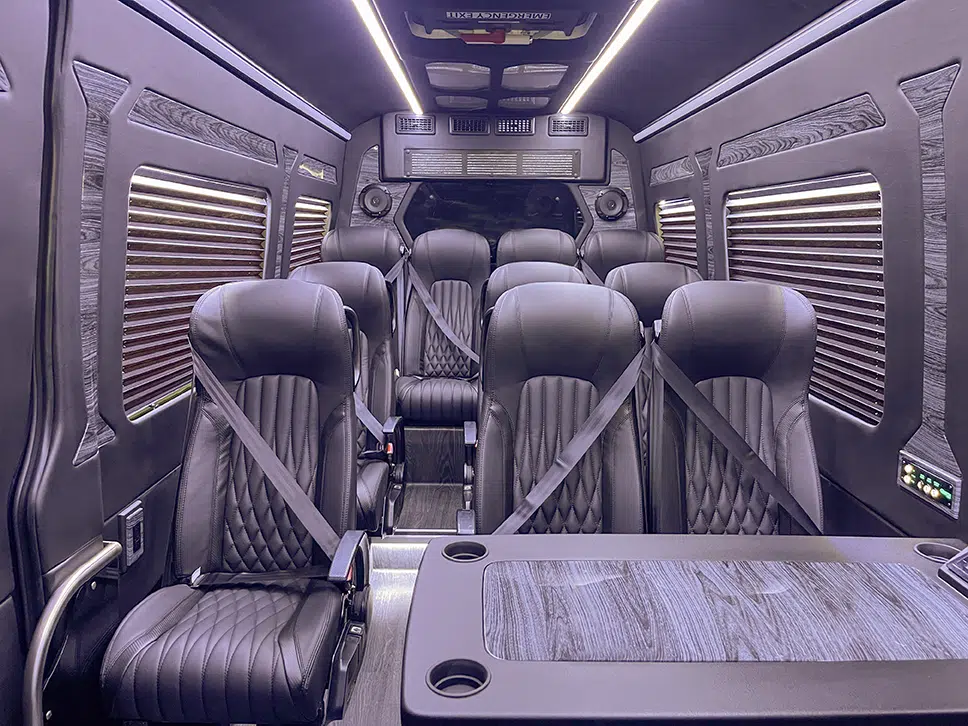
This one surprises people. Federal law has historically not required seatbelts on all motorcoaches, and plenty of older equipment still on the road does not have them.
We take this personally. When we founded our original bus company in 2008, we learned motorcoaches were not required to have seatbelts, and our kids were young at the time. So we installed them ourselves and became the first company in Texas with seatbelts across the entire fleet. Those same kids are in high school now and still ride our buses. You can see the current equipment on our fleet page.
If you are booking collegiate transportation or any trip involving students, this question is not optional.
4. Who is driving, and how were they vetted?
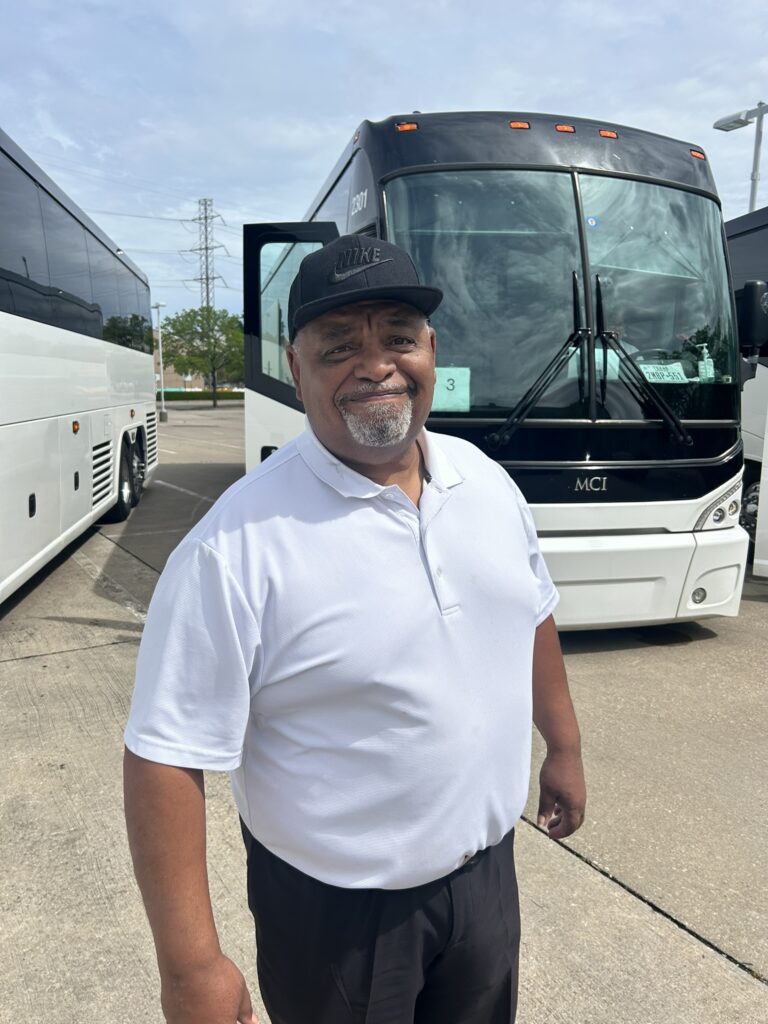
A commercial driver’s license alone is not enough. Passenger transport requires a CDL with a passenger endorsement, and your operator should be running pre-employment background checks, motor vehicle record reviews, and DOT drug and alcohol testing.
Ask how long their average driver has been with the company. High turnover in this industry usually signals something about pay, scheduling, or equipment, and none of those explanations are good for you.
5. How do you monitor drivers between inspections?
Annual inspections tell you about a vehicle on one day of the year. They tell you nothing about how someone drove yesterday.
Modern operators use telematics and camera systems to track speed, hard braking, following distance, and fatigue indicators, then coach drivers on what the data shows. We use Samsara camera technology across our operation for exactly this reason. Ask whether coaching actually happens or whether the cameras are just recording for insurance purposes after something goes wrong.
6. What is your hours of service policy on long days?
Federal rules cap driving time and require rest periods, but the practical question is what happens when your event runs late.
If your group is scheduled for a 7 AM departure and an 11 PM return, ask specifically how that is being staffed. A good operator will tell you upfront whether the day requires a relief driver or a scheduled break, and will build that into the quote rather than discovering it at 10 PM. This comes up constantly with wedding transportation and multi-day group outings and events, where the return time is genuinely unpredictable.
7. What happens if a vehicle breaks down?
Equipment fails. The question is whether there is a plan.
Ask about fleet size, backup availability, and how quickly a replacement can reach you. A company running four buses in a single market has different contingency options than one running two. Ask who you call at 6 AM on a Saturday and whether that reaches a live person or voicemail.
8. What insurance do you carry?
For vehicles designed to carry sixteen or more passengers, federal minimum liability coverage is five million dollars. Ask for a certificate of insurance, and ask whether your organization can be added as an additional insured, which many corporate and school clients require anyway.
Any operator that treats this as an unusual request is not doing much corporate work.
What good answers have in common
Notice that none of these questions are about legroom or wifi. The operators worth hiring answer all eight quickly and without defensiveness, because the information is already at hand.
That is the standard we built around, and it is why clients ranging from corporate teams to university athletic programs keep coming back. You can read more about how and why we started, see what clients have said in our reviews, or check our FAQs for booking specifics.
We also handle recurring contract and workforce transportation and daily airport transfers, where these standards matter every single day rather than once per event.
Ready to talk through a trip? Contact our team or call 469-916-9905, and ask us all eight.
Related Articles
Why Experience is the Ultimate Safety Feature: The Story of Round 2
In the transportation industry, anyone can buy a bus. But you can’t buy twenty years of seeing every possible detour,…
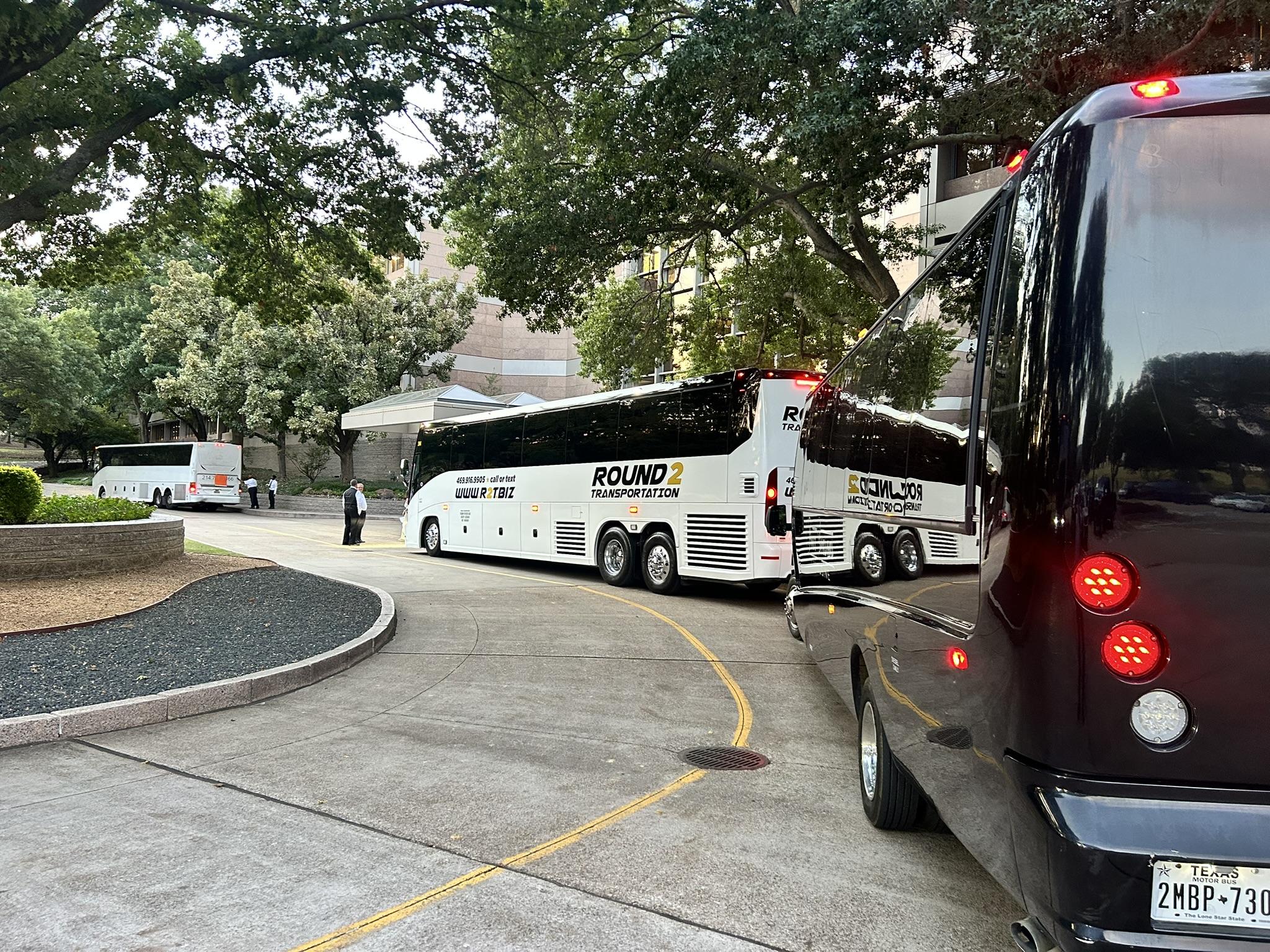
Six Years Strong: R2T Powers Pepsi’s Day of Caring for United Way
Earlier this month, Round2 Transportation was proud to partner once again with the teams from PepsiCo and Frito-Lay for their…
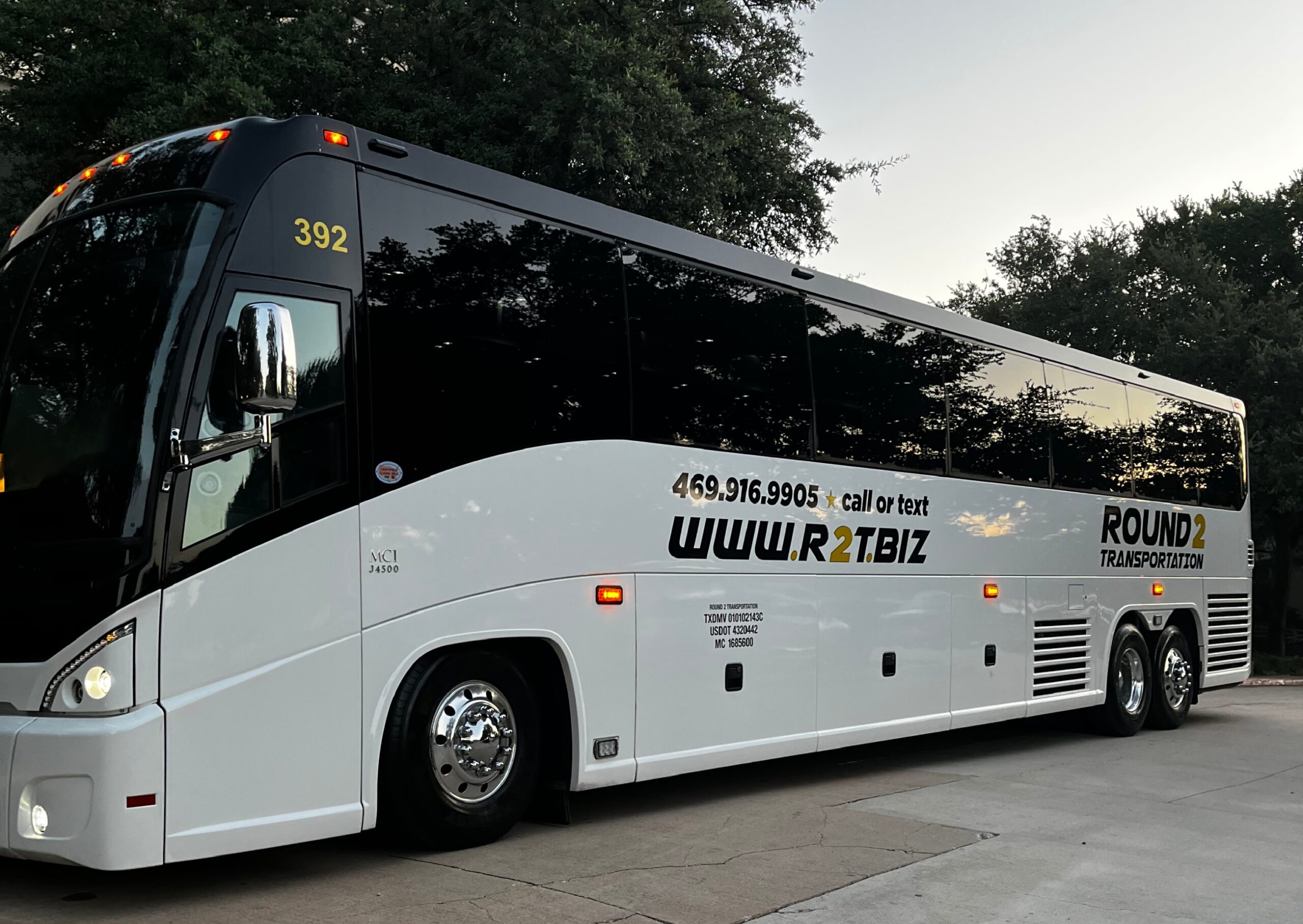
How is business going so far with Round 2 Transportation?
Round 2 Transportation (R2T) started motorcoach operations on April 1, 2025. We started with two 2026 motorcoaches and are thankful…
EXPERIENCE RELIABLE, COMFORTABLE,
AND PROFESSIONAL TRANSPORTATION.
Count on Round2Transportation for safe, punctual, and stress-free travel. From airport transfers and corporate travel to group outings and special events, we ensure a smooth, comfortable ride every time.